Employers
The workplace is an important setting for supporting health and wellness.
Workers spend a third of their day at work. Comprehensive wellness initiatives foster a culture of health and support employees' physical, emotional, and social well-being.

The Business Case
How Employee Wellness Affects You
Investing in employee health isn't just the right thing to do — it has measurable business impact.
Loss in productivity related to health problems costs U.S. employers more than $225 billion every year.
Research shows that employees in good health are more likely to deliver optimal performance.
Healthy employees have a better quality of life and a lower risk of disease, illness, and injury.
Healthy employees are happy employees who are engaged in your success.
Source: Centers for Disease Control and Prevention
Get Started
Ideas to Incorporate Wellness into the Workplace
Every workplace can start somewhere. Here are practical initiatives you can introduce to build a culture of health.
- Online health risk assessments
- Screenings
- Vaccination clinics (e.g., flu)
- Promoting the Employee Assistance Program (EAP) to support employees’ mental health and well-being
- Seminars/workshops on health and wellness topics
- Health fairs
- Employee interest surveys
- Lunchtime exercise classes or walking groups
- Challenges — physical activity and/or weight loss/management
- Organizing teams for a 5K run/walk
- Environmental supports, such as signs encouraging employees to take the stairs, improving stairwell lighting, and maintaining cleanliness and safety
- Active meetings (e.g., walking, stretch breaks)
- Healthy food options at meetings, trainings, and conferences, as well as in workplace cafeterias, snack bars, and vending machines
- Workplace policies that promote and support employees’ health and well-being (e.g., allowing activewear when engaging in physical activity)
The Ripple Effect
When You Help Employees, Everyone Benefits
Help employees
Develop healthier habits
You'll notice
Reduced absenteeism
Help employees
Maintain a healthy weight
You'll notice
Increased productivity
Help employees
Improve physical fitness
You'll notice
Lower rates of injury
Help employees
Enhance energy and mood
You'll notice
Improved relations and morale
Help employees
Reduce stress and anxiety
You'll notice
Improved focus
Building the Foundation
Organization and Planning
A successful workplace wellness program starts with strong leadership, clear goals, and inclusive planning.
Establishing a wellness committee is an important step toward creating an effective workplace wellness initiative. Wellness committees communicate with, motivate, and support employees in their wellness goals.
Wellness committees are teams of employees who meet formally, set objectives, and encourage healthy behaviors at work.
Wellness leaders collaborate with management and staff to plan and organize initiatives, maintain committees, and assess program effectiveness.
- Create and coordinate workplace wellness plans
- Oversee employee wellness committees
- Direct employees to wellness resources
Find more information on pages 6-7 of the DHR Workplace Wellness Toolkit.
Assessing workplace health helps determine what factors influence employee wellness and identifies opportunities for improvement.
Every workplace has a unique mix of employees with different wellness-related needs and interests. Assessing interests and effectiveness helps employers choose the most valuable activities.
Find more information on pages 8-10 of the DHR Workplace Wellness Toolkit.
Employers must ensure that all employees have equitable access to wellness opportunities and support, regardless of personal or demographic characteristics.
Health equity means removing obstacles people face in achieving their full health potential due to social or systemic conditions.
Find more information on pages 11-12 of the DHR Workplace Wellness Toolkit.
Focus Areas
Health and Wellness
Supporting physical activity benefits employers and employees alike, because active employees make for a healthier, more productive workforce. All workplaces can provide activity opportunities.
- Improves aerobic and muscular fitness
- Reduces risk of high blood pressure and stroke
- Reduces risk of depression
- Improves attention and cognitive function
Regular activity supports healthy aging and lowers risk of chronic conditions such as diabetes, heart disease, and some cancers.
Find more information on pages 16-18 of the DHR Workplace Wellness Toolkit.
Employers should strive to offer healthy food and beverage options in cafeterias, vending machines, and during meetings and trainings. Healthy eating patterns reduce risk for chronic diseases.
Learn more from the Dietary Guidelines for Americans, 2020-2025.
Find more information on pages 19-21 of the DHR Workplace Wellness Toolkit.
Mental health reflects emotional, psychological, and social well-being. Employers can support mental health by offering resources for stress management and good sleep habits.
Find more information on pages 23-28 of the DHR Workplace Wellness Toolkit.
Breastfeeding provides short- and long-term health benefits to mothers and infants. Lactation support in the workplace reduces health risks and improves productivity.
Find more information on pages 31-32 of the DHR Workplace Wellness Toolkit.
Toolkits
Promote Workplace Wellness
Download these toolkits to get started with your workplace wellness program.
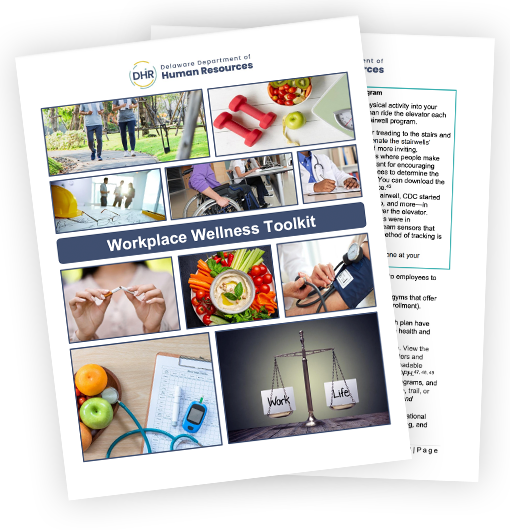
DHR Workplace Wellness Toolkit
This toolkit supports State of Delaware agencies and any employer looking to implement workplace wellness policies. Includes best practices, tools, and resources for organizing wellness initiatives, plus topics such as physical activity, healthy eating, mental health, lactation support, and more.
Developed jointly by the State of Delaware Department of Human Resources and the Division of Public Health.
Workplace Wellness Toolkit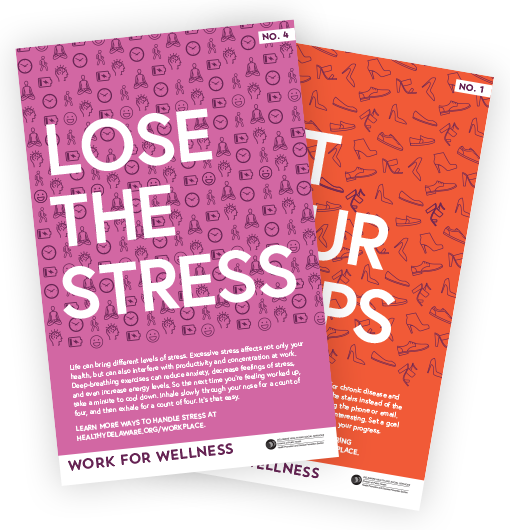
Workplace Wellness Promotional Resources
Communication tools including motivational posters, monthly email templates, and goal-setting calendars.
- Motivational posters
- Monthly email templates
- Goal-setting calendars
External Resources
CDC Resources
Access tools and guidance from the Centers for Disease Control and Prevention to support your workplace wellness program.
The CDC Worksite Health ScoreCard (HSC)
HSC helps employers assess whether they have implemented evidence-based health promotion in their workplace.
CDC Workplace Health Program
Employer-based training program to improve organizational health for participating employers and certified trainers.
CDC Workplace Health Resource Center
Searchable, research-based tools and resources for workplace wellness.
CDC Workplace Health Model
Guidance for building coordinated, systematic, and comprehensive workplace health programs.
Related Resources
Healthy Living
Live better. Our Healthy Lifestyle Map shows where to find fresh local produce, fitness centers, parks, and trails.
Tobacco Cessation
Delaware Quitline and QuitSupport offer counseling to help employees quit smoking.