Skin Cancer
Protect your skin. It could save your life.
Sun exposure can cause premature aging, wrinkles, age spots, an uneven skin tone, and cancer. Protection from damaging ultraviolet radiation is important year-round.

Prevention & Screening
How to prevent skin cancer and detect it.
Ultraviolet radiation from the sun and indoor tanning damages the skin’s top layer. Long-term sun exposure, tanning, and sunburns all increase your chance of developing skin cancer, the most common cancer in the United States.
Protect your skin.
Wear sunscreen of SPF 30 or higher, sunglasses, a wide-brim hat, and clothes that cover most of your body. Stay in the shade when you can, and check your skin often for changes.
Who should be screened?
If you spend time in the sun, particularly if you work outdoors, you should be screened. You should also be screened regularly if you have lighter natural skin color, blue or green eyes, blond or red hair, or skin that burns or freckles easily.
See a dermatologistSun Exposure
Be smarter about sun exposure.
Watch this short video to learn practical, everyday ways to protect your skin year-round.
Warning Signs
Stay on top of any skin changes.
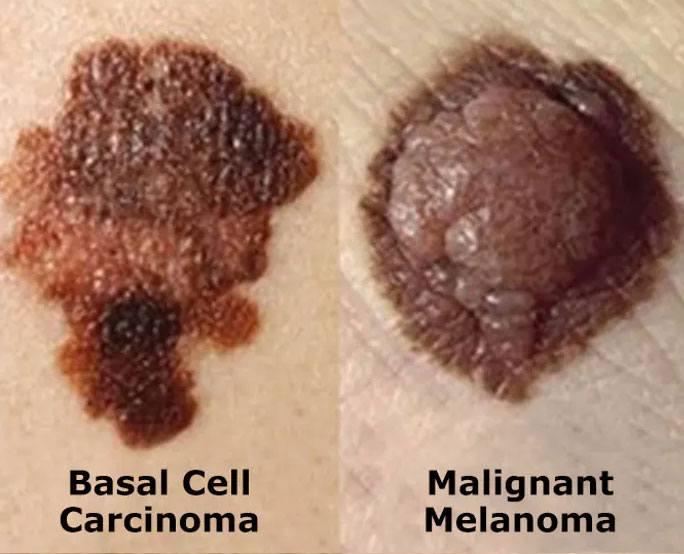
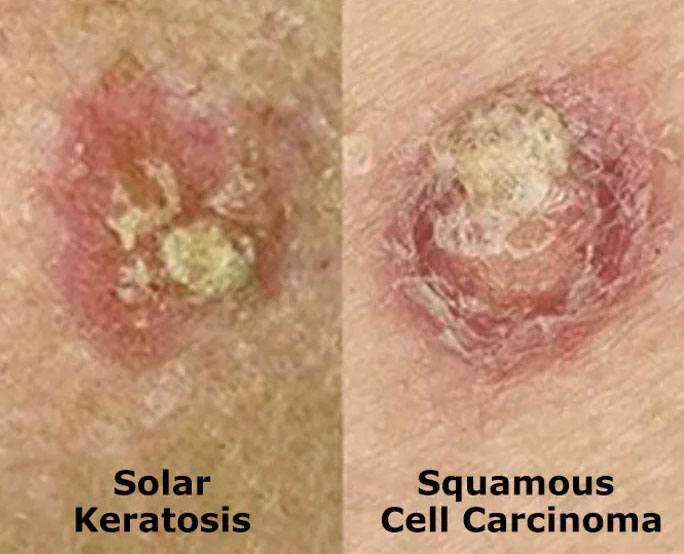
Is that rough spot something you should worry about? Here’s a look at four common types of skin cancer and what they can look like.
- Basal Cell Carcinoma Can look like a waxy or white bump, a scaly patch, or an unhealed sore.
- Malignant Melanoma The most serious and potentially deadly skin cancer. It can appear as a pigmented patch or bump, usually as an irregular mole.
- Solar Keratosis A precancerous condition that can look like a small rough spot on the skin.
- Squamous Cell Carcinoma This can appear as an unhealed sore, a red nodule, or a rough bump.
Get screening support.

Need help paying for it?
Screening for Life is a program that can help pay for a screening if you can’t.
Learn More
Causes
What causes skin cancer?
People who are at higher risk for skin cancer:
Excessive UV exposure
From the sun, tanning lamps, or tanning beds.
Frequent sunburns
Especially sunburns before age 20.
Many or unusual moles
Lighter skin, freckles, or light hair
Caucasians are 10 times more likely to have melanoma than African Americans.
Blue or green eyes
Family or personal melanoma history
Women under 40 or men over 40
Xeroderma pigmentosum
A rare inherited condition that raises skin cancer risk.
Testimonials
Stories about skin cancer.
Hear from people who have experienced skin cancer and want others to take early warning signs seriously.
Learn More
Learn more about skin cancer.
These resources share prevention tips, warning signs, and practical ways to stay sun-safe.

Stay Sun-Smart: How to Choose and Use Sunscreen
Read More

Seven Steps to Save Your Skin
Read More

Do You Have Enough “Skin in the Game” When It Comes to Sun Safety?
Read More

6 Facts That Will Get Under Your Skin
Read More

10 Ways to Look Good in a Bathing Suit Forever
Read More

What Does Skin Cancer Look Like Anyway?
Read More

6 Things You Can’t Control That Could Hurt You
Read More

7 Tips to Keep You From Exposing Yourself
Read More
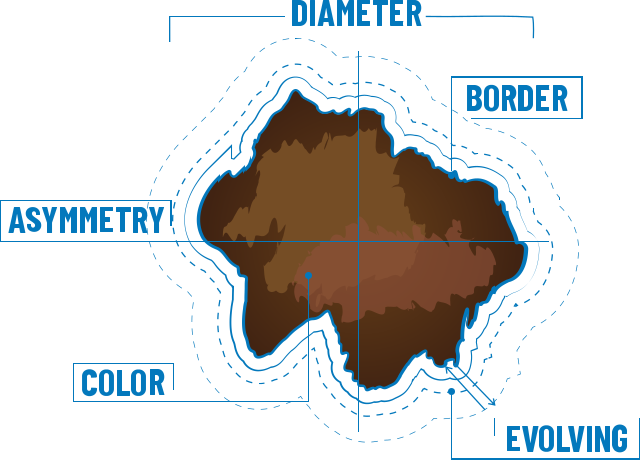
5 Skin Cancer Warning Signs In Moles
Read More

7 Tips To Keep Kids Safe in the Sun
Read More

4 Ways to Work Outside Without Killing Yourself
Read More

What Are the Odds?
Read More

Focus on Skin Cancer Prevention
Read More

How to Prevent a Sneaky Sunburn
Read More

Skin Cancer: What Young Adults Need to Know
Read More

Some Spots You Don’t Want to Find
Read More
Treatment & Support
Treatment looks different for everyone.
Find personalized support, understand your options, and connect with care teams.
If you’ve been diagnosed with cancer, Cancer Care Coordinators can help you find the services you need, when you need them. The services of these specially trained health professionals are free of charge to all Delawareans.
Learn MoreFree cancer treatment is available for up to two years to all Delaware residents who can’t afford to pay for it.
Learn MoreLearn how cancer stages are determined and what each stage means for diagnosis, prognosis, and treatment.
Learn MoreExplore clinical trial options that may offer access to cutting-edge therapies and treatments.
Learn More
Nurse Navigators
Delaware nurse navigators can help you get screened for cancer.
Whether you have insurance or not, Delaware nurse navigators can help you get screened for cancer and provide follow-up help when you get your results. Choose from the list below to call a nurse navigator directly between 9 a.m. and 5 p.m., or request a callback online.
or call directly between 9 a.m. and 5 p.m.

Surviving Cancer
Tips for life after diagnosis.
We offer a variety of tools, programs, and resources to support healthy living after diagnosis.
Eating Well
Find nutrition guidance on the road to recovery.
Learn MoreExercising
Discover how an active routine can give you the best chance of recovery.
Learn MoreSelf-Management Program
Build skills to manage your health day to day.
Learn MoreSupport Groups
Talk with others about your cancer to guide choices and find support.
Learn More