No crash diets.Just consistent healthy choices.
Changing the way you think about dieting doesn’t have to be hard. No strict limits. No all-or-nothing. Just make healthy, satisfying choices as often as you can.

How to eat better.
Eat more whole grains (wheat instead of white bread) and brown rice.
While calorically similar, they have much more fiber and other essential nutrients.
Avoid eating high-fat dairy products and look for lower-fat options.
These are high in saturated fat, which can increase your risk of heart disease.
Drink alcohol in moderation.
Alcohol is a toxin that increases your risk of disease. It's also high in calories and has no nutritional value.
Eat more fish.
Fish is a great source of necessary protein and fat. It's also low in calories compared with other meats.
Limit your consumption of grilled meats.
Charring and high temperatures create chemical compounds than can be cancerous.
Limit your consumption of processed deli meats.
They're salty, fatty, and often contain cancer-causing preservatives. There are better ways to get that protein.
Eat at least five servings of vegetables and fruits every day.
They're not just delicious. They're some of the healthiest things you can eat! Fruits and vegetables are packed with vitamins and minerals, and are an essential part of a healthy diet.
Avoid solid-fat foods like butter, cream, and shortening.
Solid fats are high in saturated fat, which can raise your cholesterol and increase risk of heart disease.
Healthy. Easy. Yummy.
Save these recipe cards to make meals that are delicious, inexpensive, and good for you too.
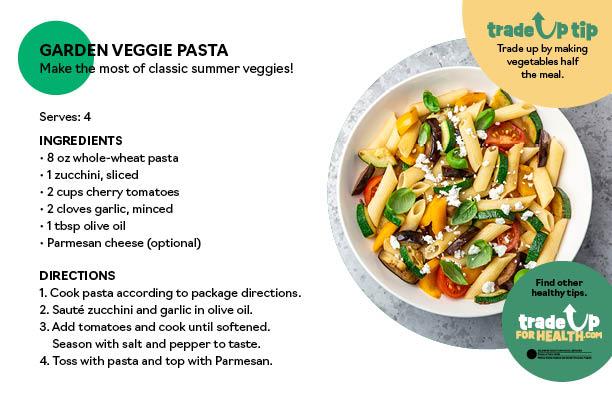
Garden Veggie Pasta
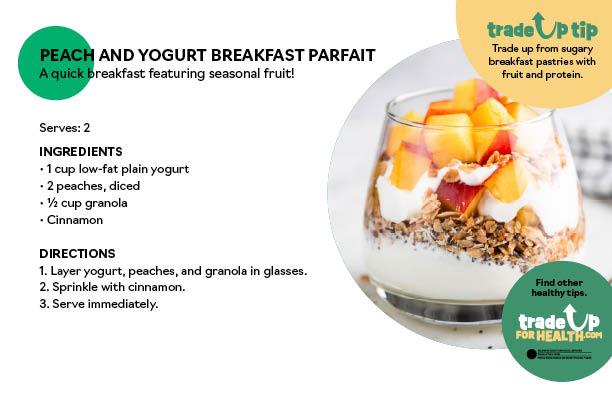
Peach and Yogurt Breakfast Parfait
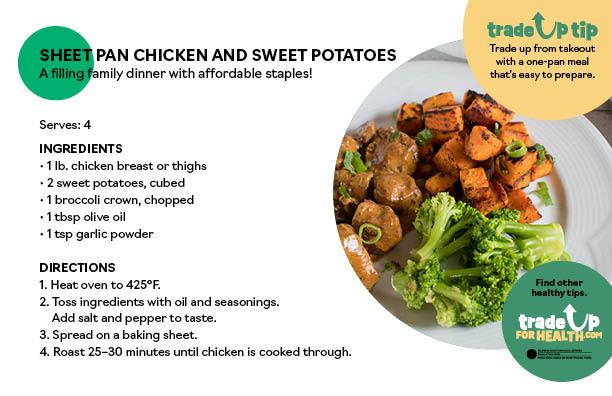
Sheet Pan Chicken and Sweet Potatoes
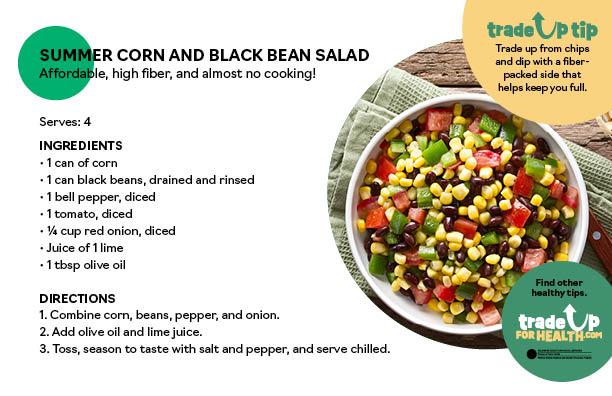
Summer Corn and Black Bean Salad
Turkey and White Bean Chili
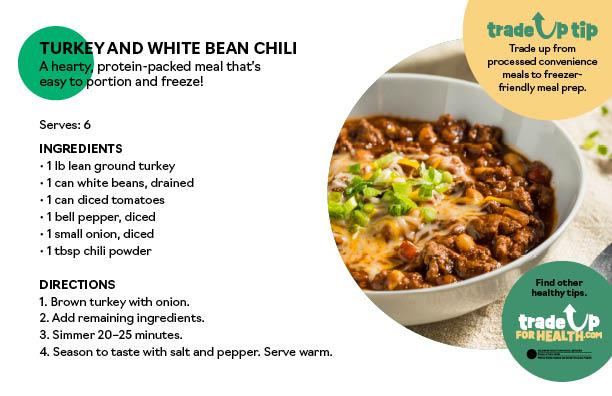
Weight loss begins in the kitchen.
- Eat the rainbow - add a variety of foods like dark leafy greens, oranges, and tomatoes to your diet. Or add a red sauce instead of extra salt.
- Eat calcium-rich foods - try low-fat milk and fat-free flavored yogurts.
- Use fresh, frozen, or canned fruits - just stay away from the ones with extra sugar.
- Try a new twist on an old favorite - instead of frying fish, try grilling it. Maybe even try a recipe that uses dry beans in place of high-fat meats.
- Use fresh, frozen, or canned vegetables for a quick side dish - try something new each week.
- Eat comfort foods less often - when you do, replace high-calorie ingredients with lower-calorie ones.
Know how many calories you should eat
Ingredient spotlight:
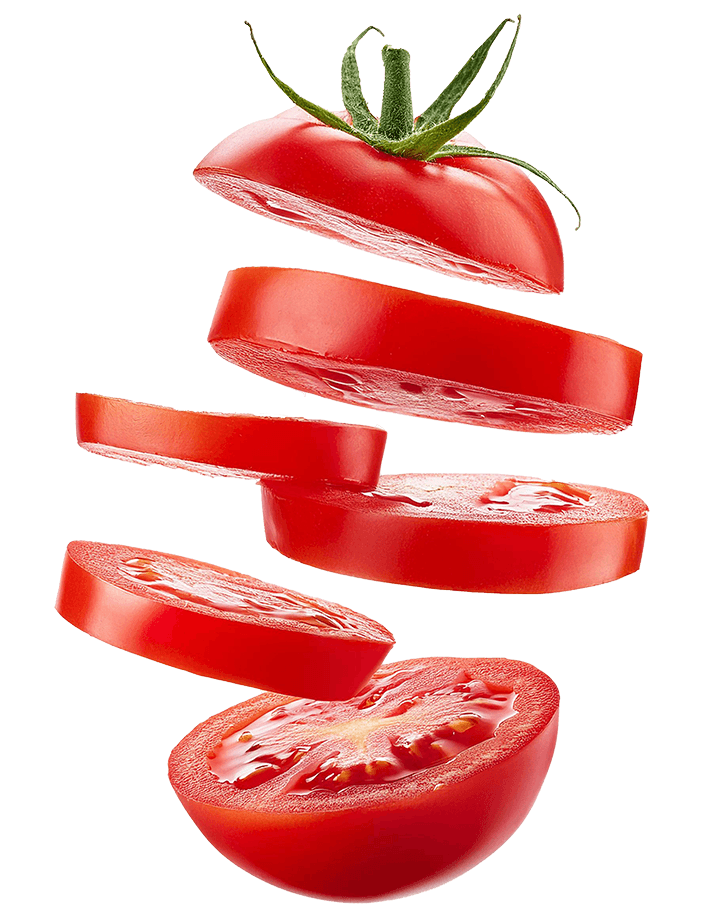
Tomatoes
Late summer is when tomatoes really shine. They're cheaper, more plentiful, and bursting with flavor - so use them as often as you can before the season's over.
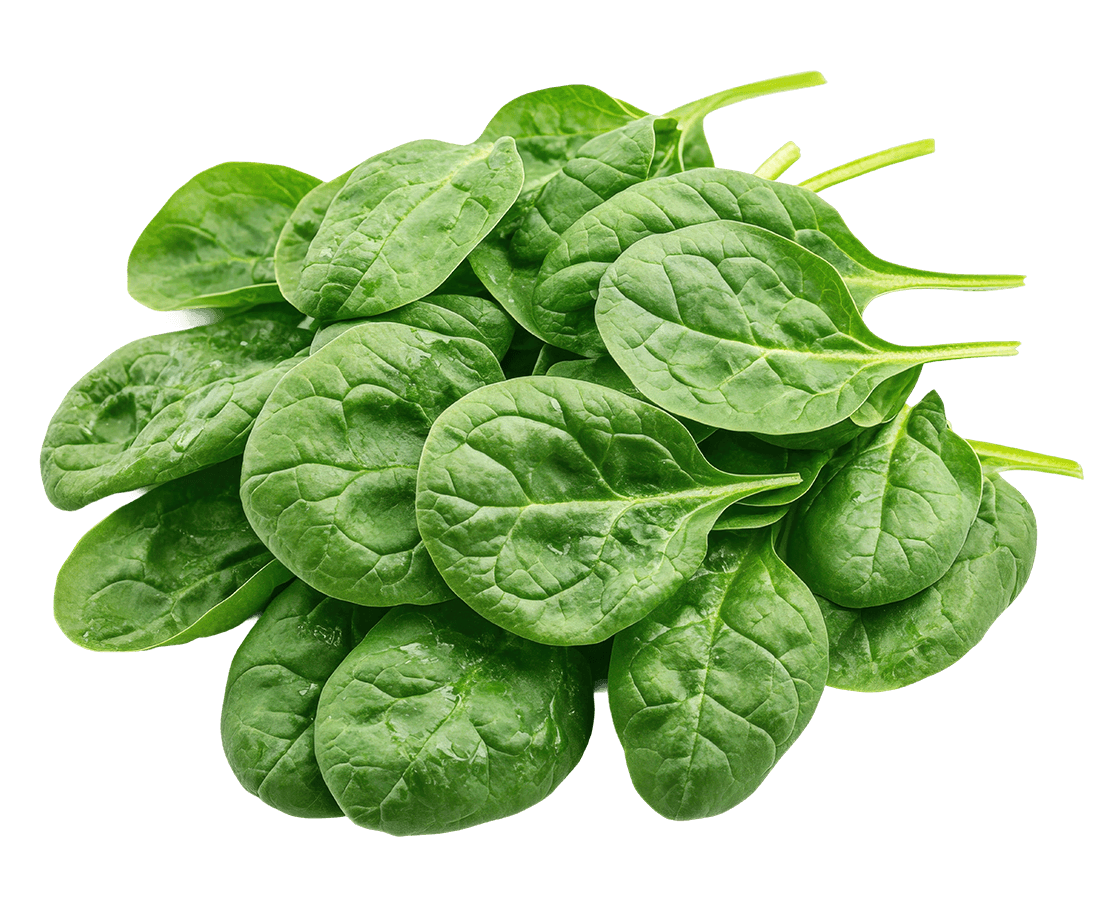
Spinach
A powerhouse green that's packed with nutrients. Try it cooked, or raw in a fresh, crispy salad - or sneak it into a smoothie for a healthy boost.
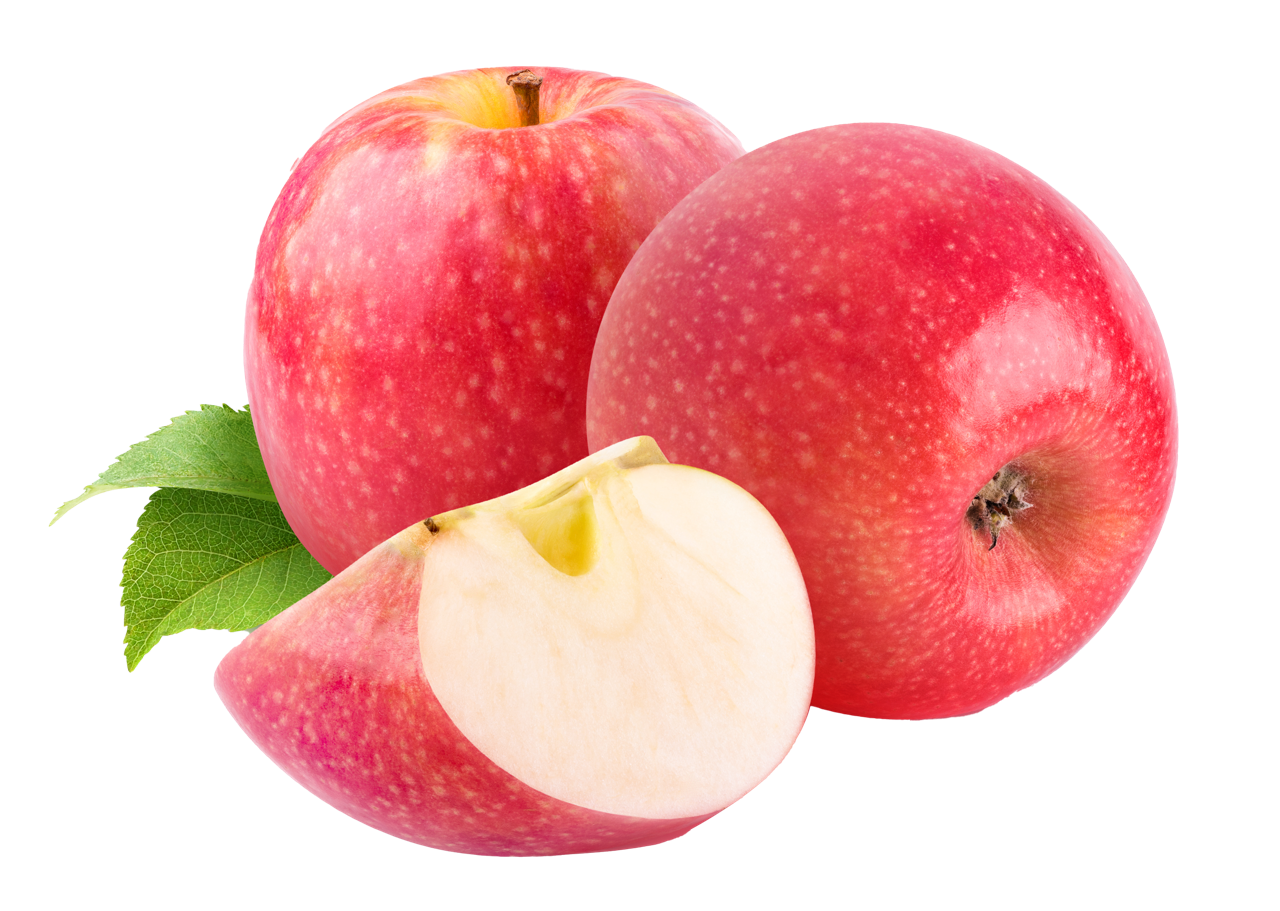
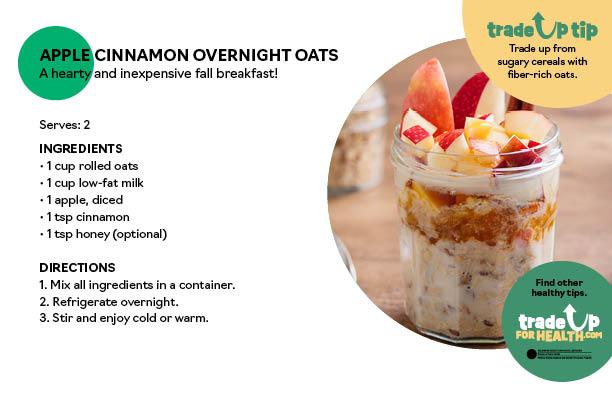
Apples
It's finally fall, and apples are everywhere! This sweet and crunchy treat is just as delicious cooked as it is raw. Try one (or all) of these easy and healthy recipes to use fall's favorite fruit.
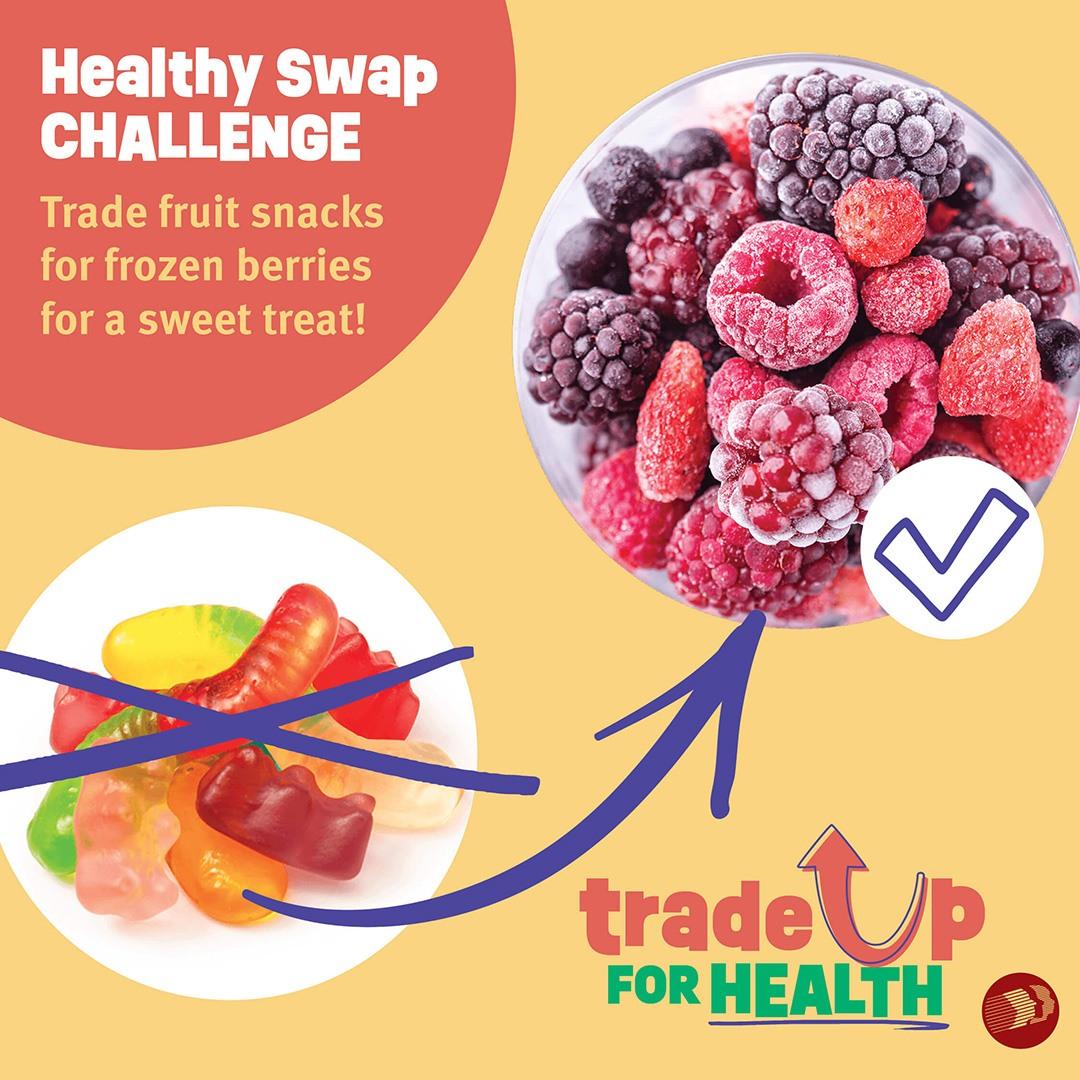
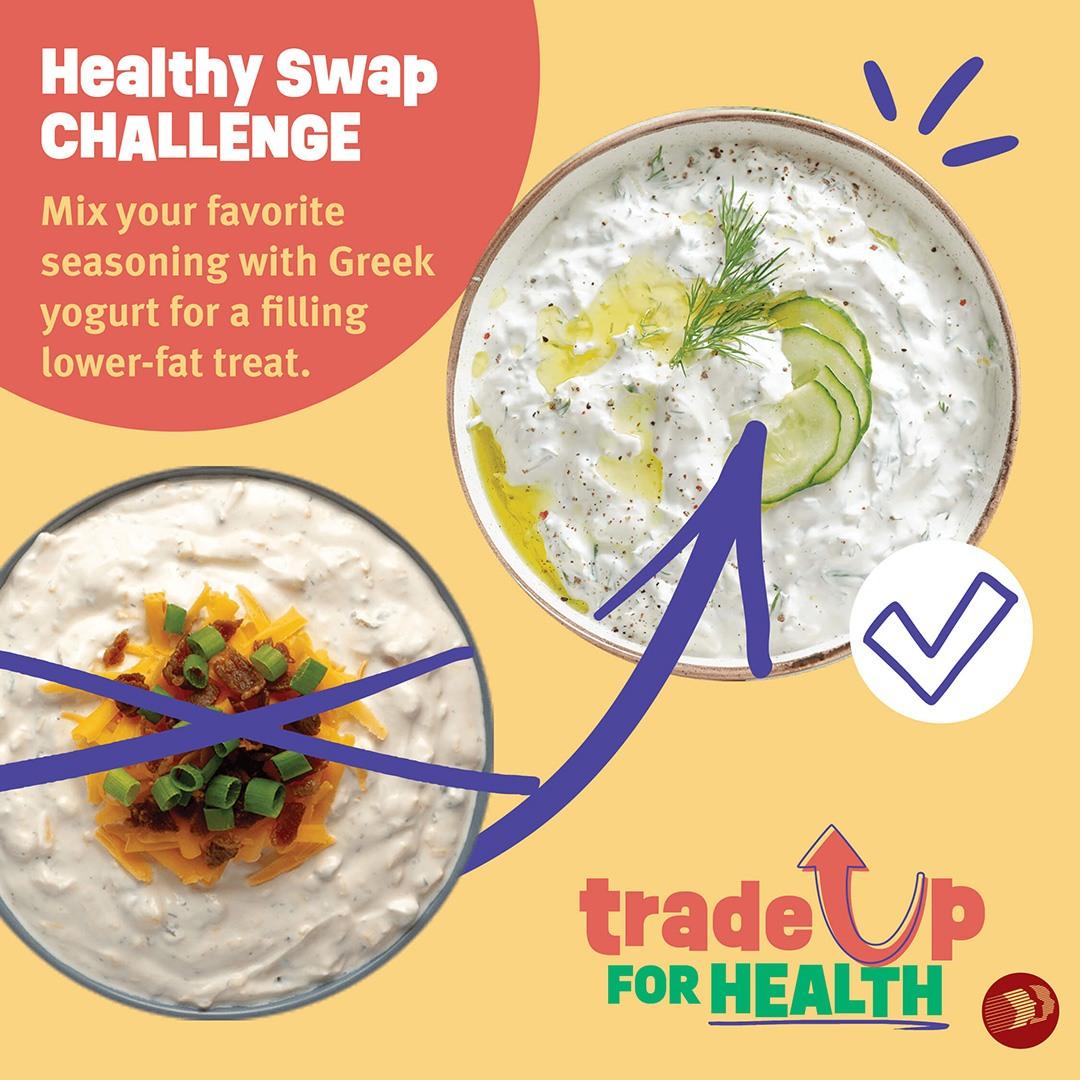
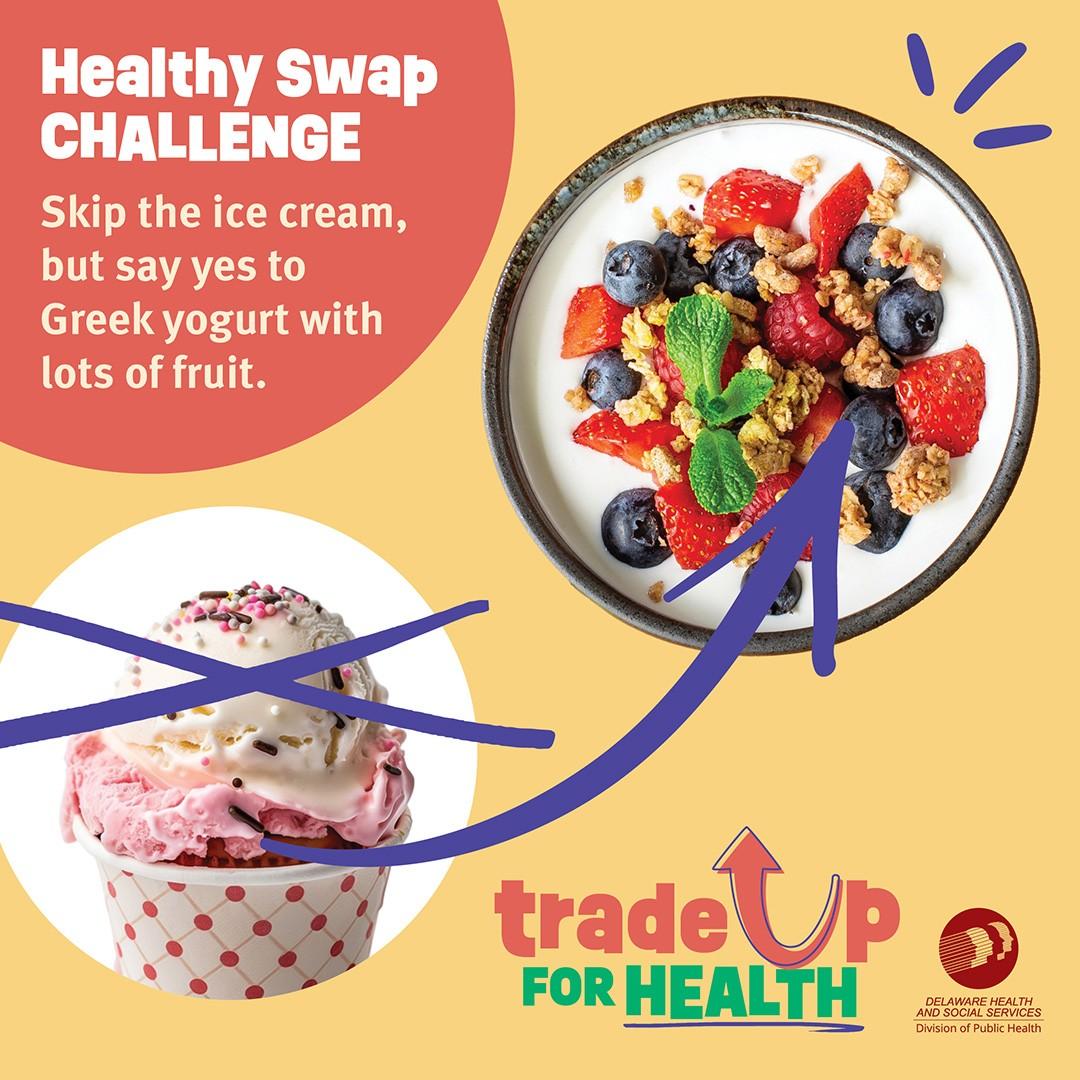
Healthy swaps to eat better
Who says healthy can’t be delicious? Whether it's an occasional craving or a go-to favorite, lots of foods can be swapped for a better alternative that can help you reach a healthy weight and avoid chronic illness.