Fact Sheets
Share information about the dangers of vaping and e-cigarettes.
Learn MoreToolkits to help with vaping
With proper knowledge and tools, we can help combat nicotine addiction among middle and high school students — and prevent it in the future.

Start Here
Whatever your role, find the facts, practical tools, and evidence-based resources you need to help.
Share information about the dangers of vaping and e-cigarettes.
Learn MoreSupport them with trusted quit resources and tools.
Learn MoreHelp them breathe easier and make your classroom (and curriculum) anti-vape.
Learn MoreThey lean on you — find the resources to help them learn too.
Learn MoreAbout 11% of students are using tobacco products — and nearly all of that use is driven by e-cigarette use (vaping). By comparison, cigarettes (1%–2%), cigars (up to 3%), and hookahs (up to 2%) are reported far less often.
Source: 2024 Delaware Youth Tobacco Survey
Vaping Fact Sheets
Check out the fact sheets about e-cigarettes – what they are, how they became a youth crisis, their risks and harmful effects, the 10 important warning signs of student vaping, and more. Order FREE printed copies of the items below or view them now.
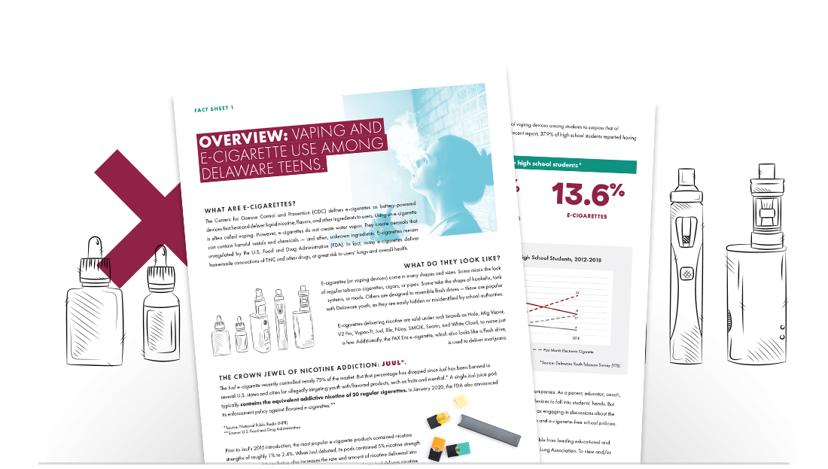
This informative sheet reveals what e-cigarettes look like, how they work, their nicotine content, brands to be on the lookout for, and more.
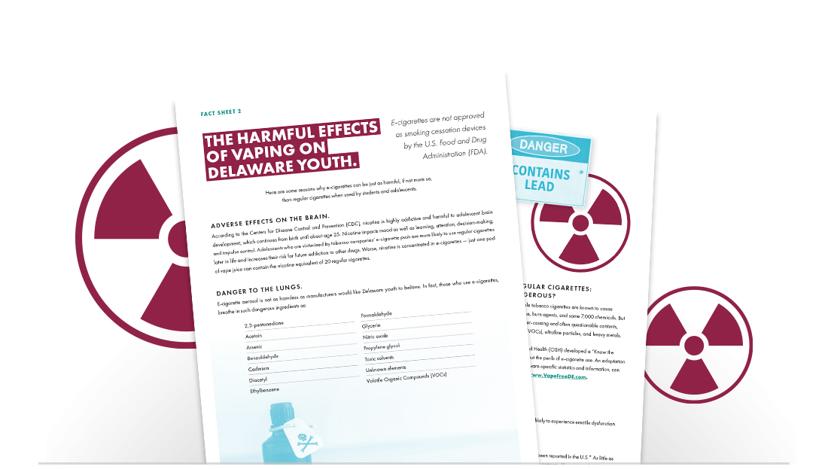
Learn the signs and symptoms of e-cigarette use, how nicotine affects adolescent brains, and the dangerous differences between regular cigarettes and e-cigarettes.
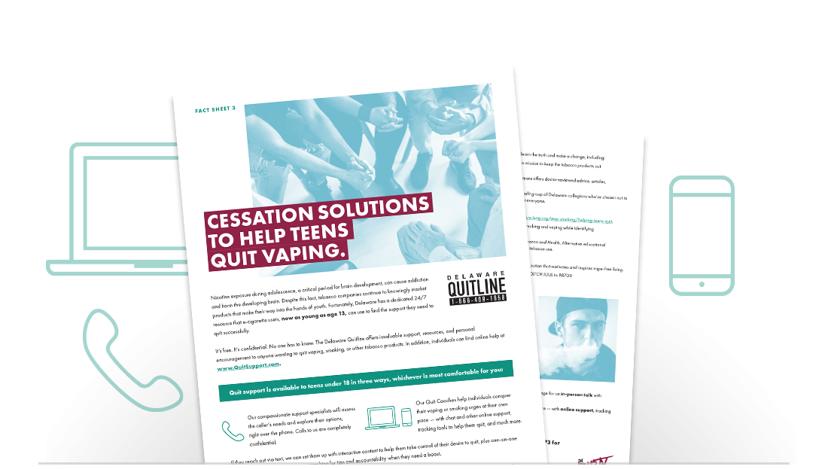
There are plenty of organizations and resources out there offering help for teens who want to quit. This fact sheet can show someone a way out.
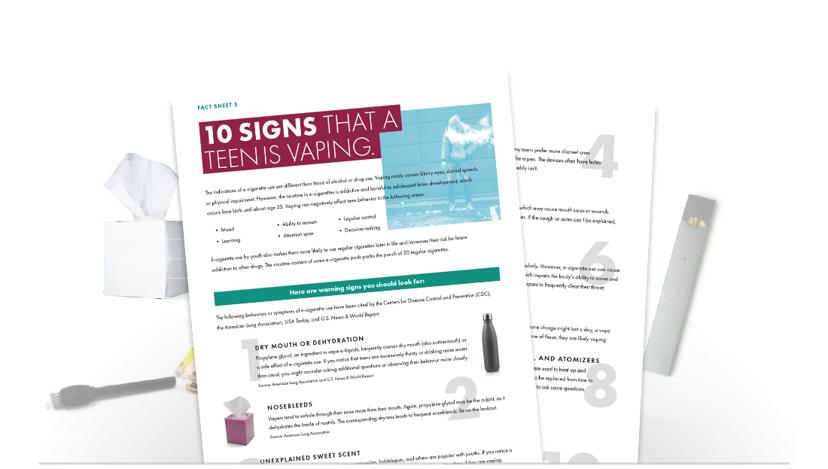
Learn to recognize the 10 telltale signs of student vaping, from dry mouth, scented breath, and severe coughs to suspicious batteries, wires, and more.
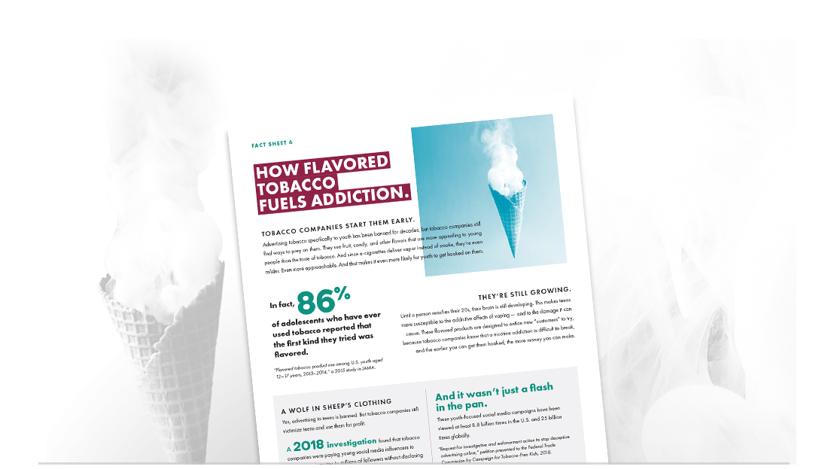
Tobacco companies are still finding ways to talk to teens. This fact sheet gives a quick look at some of their tactics.
Cessation options
Nicotine exposure during adolescence, a critical period for brain development, can cause addiction and harm the developing brain. Many vape pods can deliver the nicotine equivalent of 20 regular cigarettes. Fortunately, Delaware has a dedicated 24/7 resource that e-cigarette users, now as young as age 13, can use to find the support they need to quit successfully.
It’s free. It’s confidential. No one has to know. It’s the right call to make for any student or educator who vapes or smokes. The Delaware Quitline offers invaluable support, resources, and personal encouragement to anyone who wants to quit vaping, smoking, or using other tobacco products.
Cessation fact sheet1.6MB
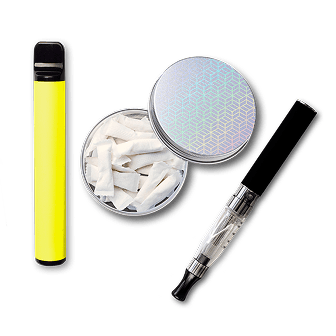
These are school supplies.

These aren’t.
For Educators & Parents
Parents and educators have their own sets of challenges and priorities when it comes to teen vaping and e-cig use. Here, you’ll find knowledge and resources that can equip you to talk, learn, and do something about it — and protect the teens in your life from the dangers of vaping.

Guides, resources, and even curriculum to help you engage students, other teachers, and parents in the fight against the teen vaping epidemic.
View Educator Toolkit

Stay in the know about the facts and dangers of vaping, why teens do it, how you can spot it, and how you can help your teen escape the influence.
View Parent Toolkit
May 24, 2022 | USNews.com
May 19, 2022 | ScienceNewsForStudents.org
May 11, 2022 | News-Medical.net
May 10, 2022 | News-Medical.net
April 21, 2022 | MedicalNewsToday.com
March 22, 2022 | BostonGlobe.com
February 22, 2022 | ASM.org
January 11, 2022 | News-Medical.net
November 08, 2021 | MedicalXpress.com
October 14, 2021 | Chron.com
September 09, 2020 | CDC.gov
August 11, 2020 | UCSF.edu
The Vaping Prevention and Education Resource Center provides free science-based, standards-mapped materials that teachers can use to help their students understand the dangers associated with vaping and nicotine addiction. CTP also developed free materials for parents and teens.
The launch of the resource center illustrates FDA’s continued commitment to youth vaping prevention. We will be continuously updating the resource center with new materials, so check back often for the latest resources.
Teachers will find lesson plans, interactive tools, infographics, and videos with tobacco facts and tips about how to teach teens about the dangers of vaping.
Parents will find fact sheets, videos, and resources to help them understand and recognize vapes, talk with their children, and keep the conversation going over time.
Students will find real-life stories and relatable content to help them understand vaping, nicotine addiction, common myths about vapes, and how to say no to vaping.
The CDC has a webpage about e-cigarettes that provides general information as well as resources for:
See and learn about the different generations of vape devices, as well as user terminology and substances like e-liquids, synthetic cannabinoids, and CBD oil. Good information for:
Get the facts on why e-cigarettes and young people don’t mix, how nicotine affects young brains, the dangerous student trends in middle schools and high schools, and much more. Site is designed for:
These free nicotine cessation materials from the American Academy of Pediatrics (AAP) are available for health care providers to share with adolescent and pediatric patients who vape, smoke, or use tobacco products. These tools can help young people to quit successfully — through clinical interaction, the use of electronic health records, and nicotine replacement therapy, as well as cessation services such as text, telephone quit lines, and online resources. Learn about AAP’s Behavioral Cessation Supports for Youth here. View and download materials directly, below.